
Norwegian Forest Cat Guide: Care, Personality & Health

Updated: Aug 7
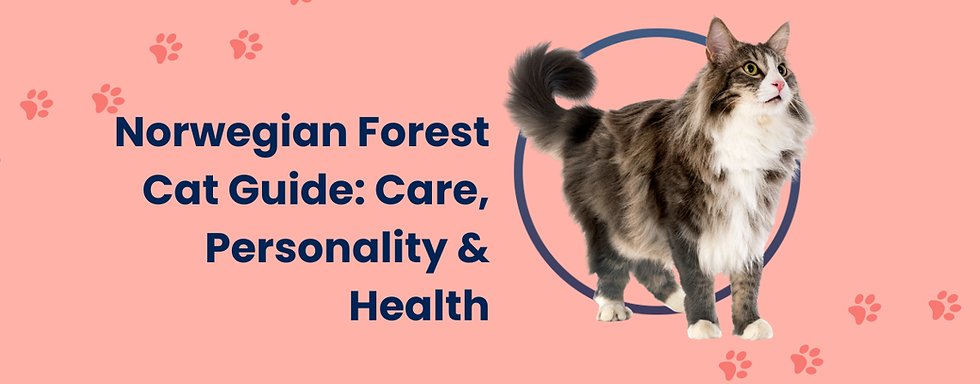
Originating from the frigid forests of Norway and dating back all the way to the Vikings, the Norwegian Forest cat is a large and magnificent Scandinavian cat breed. This water-resistant double coat cat breed has thrived in the cold and harsh climate of Scandinavia for centuries. Norwegian Forest cats, commonly called “skogkatts” in Norwegian and “wegies” in the US, are calm, affectionate, and lovable pets.

Although considered a semi-longhaired cat breed, this feline is a relatively low-maintenance cat breed, requiring only weekly brushing to prevent tangles and matting. Norwegian Forest cats shed moderately year-round, with heavy seasonal shedding in spring as their coats adapt for warmer weather. They’re natural hunters and climbers, and tend to prefer being close to their humans rather than on their laps. An independent yet friendly cat with a quiet demeanor, their patience with kids and other pets makes them a perfect choice for any household looking for a loving feline companion.
Quick facts about Norwegian Forest cats
Physical characteristicsWeight: 12-16 pounds for males, 9-12 pounds for females Coat type: Long hair with a dense undercoat and a water-resistant topcoat Colors: Any color or pattern, except colorpoint Personality and careTemperament: Gentle, friendly, and independent Lifespan: 12-16 years Grooming: Weekly brushing; daily during shedding season Origin: Scandinavia/Norway Hypoallergenic: No Best for: Families with children, multi-pet households |
History of the Norwegian Forest cat
Considered a legend in Norway, this famous Scandinavian cat breed has ancient roots, with large forest cats appearing in Norse mythology dating back thousands of years. This breed is deeply woven into Norwegian culture and folklore, including tales of the Norse goddess Freya, whose chariot was said to be pulled by six large forest cats.
In the mid-20th century following World War II, the Norwegian Forest cat nearly went extinct due to crossbreeding with other cat populations. However, dedicated Norwegian cat enthusiasts launched breeding programs to preserve the breed, which was eventually recognized as Norway’s national cat in the 1970s by King Olaf V of Norway. Thanks to these conservation efforts, Norwegian Forest cats are thriving once more and beloved by cat enthusiasts around the world.
Physical characteristics of the Norwegian Forest cat
Norwegian Forest cats are large and imposing creatures. You'll easily recognize them by their dense and lavish coats, the ruff around their necks, and their bushy tails, all perfectly designed to survive the cold and harsh Norwegian winters.
Norwegian Forest cats mature slowly, reaching their full size at age 5, which is between 9-16 lbs (females 9-12 lbs, males 12-16 lbs).
Appearance
Characterized by their muscles and broad chests, their back legs are slightly longer than their front, making their rump higher than their shoulders. Their large, almond-shaped eyes are typically green, gold, or copper, giving them an alert, intelligent expression. This semi-longhaired cat breed has medium to large, furry ears that are wide at the base with rounded tips.
Norwegian Forest cats are among the most distinctive long-haired cat breeds, featuring a specialized double coat that keeps them warm during harsh Scandinavian winters, while their dense undercoat provides warm insulation from the cold. The combination of dense undercoat and water-resistant guard hairs creates their waterproof protection.
Norwegian Forest cat vs. Maine Coon
Norwegian Forest cats are sometimes mistaken for Maine Coons due to their similar size and luxurious coats. Here's a quick comparison to help you tell them apart:
Norwegian Forest cat | Maine Coon | |
Origin | Norway/Scandinavia | United States (Maine) |
Personality | Independent and reserved | More outgoing, affectionate, and dog-like |
Vocalization | Quieter with a softer voice | More vocal and chatty |
Size | 9-16 lbs (females 9-12 lbs, males 12-16 lbs) | 10-25 lbs (females 10-15 lbs, males 18-25 lbs) |
Head shape | Triangular, flat forehead, straight nose | Wedge-shaped, high cheekbones, slightly curved nose |
Body | More slender body, longer body and taller hind legs | Broader, more muscular, a more powerful chest |
Eyes | Almond-shaped eyes | Oval eyes |
Tail | Long, fluffy, pointed | Bushy, less shape at the tip |
Coat | Dense, woolly undercoat and water-repellent overcoat | A silky overcoat and a less dense undercoat |
Personality and temperament
Affectionate yet independent, playful yet even-tempered, Norwegian Forest cats make excellent companions for families with children. Their mellow and laid-back personalities help them get along well with other pets and humans alike. These intelligent cats are social without being needy or demanding.
While they enjoy being near their humans, Norwegian Forest cats aren’t typically lap cats. They prefer to be close, but not on top of you. Known for their independent nature, they don’t require constant attention, making them ideal companions for those who appreciate a loving yet self-sufficient pet.
Norwegian Forest cat personality
Here are some personality traits that set Norwegian Forest cats apart:
Natural climbers who love heights and elevated perches
Quiet and soft-spoken with minimal vocalization
Playful and kitten-like well into adulthood
Patient and gentle, especially with children
Independent but enjoy being near their humans
Intelligent problem solvers
Thrive in various climates, especially cooler ones
Loyal but not needy
Taking care of your Norwegian Forest cat
Norwegian Forest cats are not considered high-maintenance pets. Like all cats, they're independent and know how to groom themselves. As a semi-longhaired cat breed, brushing them helps prevent tangles and matting.
Norwegian Forest Cat Grooming Tips
Maintaining your Norwegian Forest cat's coat and overall hygiene requires regular but straightforward care.
Do Norwegian Forest cats shed?
The Norwegian Forest cat shedding level is considered medium year-round. However, they shed heavily during spring as they molt their thick winter undercoat in preparation for warmer weather.
What are the Norwegian Forest cat grooming needs?
Weekly brushing - Brush their dense coat weekly to prevent tangles and matting (increase to daily during heavy spring shedding). Bathing is rarely necessary since they're excellent self-groomers.
Nail trimming - Keep nails trimmed by clipping them every 2-3 weeks
Ear maintenance - Check ears weekly for debris, mites, inflammation, or infection, and clean them if necessary.
Teeth brushing - Brush their teeth twice a week, making sure to use toothpaste and toothbrush suitable for cats.
Regular veterinary checkups are essential for maintaining your Norwegian Forest cat's health. Many pet insurance plans, including Kanguro's cat insurance, cover routine wellness visits to help manage healthcare costs.
Norwegian Forest Cat health Issues and lifespan
Norwegian Forest cats are strong and sturdy pets with minimal health issues, but as with all purebreeds, they are more prone to some genetic diseases. Getting a kitten insurance plan early on can help prevent gaps in coverage for pre-existing conditions.
How long do Norwegian Forest cats live?
Norwegian Forest cats typically live 12-16 years with proper care. The Norwegian Forest cat lifespan can be maximized through regular veterinary care, proper nutrition, and early detection of genetic health issues.
Common Norwegian Forest cat health issues
There are three Norwegian Forest cat congenital conditions to watch out for:
Hypertrophic cardiomyopathy (HCM) - Hypertrophic cardiomyopathy in cats refers to the thickening of the heart walls. This is a common heart disease in Norwegian Forest cats that leads to decreased heart function over time. Regular cardiac screenings are recommended to catch it early so you can start treatment as soon as possible.
Hip dysplasia - More common in dogs and large cat breeds such as the Norwegian Forest cat, hip dysplasia is when the hip joint becomes unstable, leading to stiffness, pain, and limping. With age, it can cause more serious mobility issues like lameness and arthritis.
Glycogen storage disease type IV (GSD IV) - GSD IV is caused by a defective enzyme that affects the metabolism of glycogen and can cause trouble walking, muscle tremors, and in more serious cases, organ dysfunction, muscle atrophy, and even death. Genetic testing is available in order to screen cats who are carriers. Kittens with GSD IV may show early symptoms like muscle weakness and lethargy.
Regular vet checkups for Norwegian Forest cats
Due to their predeposition to certain genetic diseases, getting cat insurance for your Norwegian Forest kitten early on helps avoid gaps due to pre-existing conditions. Kitten insurance helps ensure early detection of common illnesses through regular vet checkups, diagnostic scans, and anything else your cat needs to live a healthy life.
A good cat insurance for Norwegian Forest cats should always include these screenings:
Annual wellness exams - Crucial for general monitoring and early detection of issues
Hip evaluations - Due to their size, monitoring their mobility is important, especially as they grow older
Dental checks - This breed can be prone to periodontal disease
Hypertrophic Cardiomyopathy - Request an echocardiogram to check for thickening of the heart muscle
Glycogen Storage Disease IV (GSD IV) - Responsible breeders screen cats to ensure they don’t carry the gene. Still, if your cat has GSD IV, it’s better to know early on to manage the condition adequately.
Best diet for Norwegian Forest cats
A high-quality diet is essential for preventing weight-related issues like hip dysplasia and diabetes. Norwegian Forest cats require:
High-protein diet - As carnivores, animal-based protein is essential
Kitten food - Feed your kitten with kitten food only until age one
Balanced nutrition - A mix of wet and dry food provides hydration and dental benefits
Portion control - Measured portions twice a day help prevent obesity
Fresh water - Make sure fresh drinking water is always available
Consult your veterinarian to determine the right food type and portions for your cat's age, weight, and activity level. Many pet insurance plans cover wellness consultations that can help with nutrition planning.
Exercise and enrichment
Although it’s less common to take cats on walks, it’s still important for cats to stay active every day. Norwegian Forest cats are playful felines and need at least two sessions of 15-20 minutes activity to stay at a healthy weight and to prevent destructive behaviors that stem from boredom.
Here are a few tips to get your cat moving:
Interactive toys - Having a variety of catnip toys, wand toys, and puzzle toys with treats inside encourages your cat to move through playing
Scratching posts - Setting up vertical and horizontal scratching pads around your home encourages your cat to stretch and scratch
Climbing trees - Norwegian Forest cats are naturally climbers, so make sure you have a few climbing trees, perches, and towers
Should I get a Norwegian Forest kitten?
After learning more about these balls of fur, you might be wondering: Should I adopt a Norwegian Forest cat? Adding a Norwegian Forest cat to your household can be a wonderful decision as long as you’re ready to take on the responsibilities of being a pet owner. Once you’ve made your choice, it’s vital to find a responsible breeder or a reputable adoption center to help ensure you get a healthy kitten who will stay with you for the long haul.
Where to adopt a Norwegian Forest cat
Reputable breeders
If you’re going for a purebred Norwegian Forest cat, it’s vital to find a responsible breeder. Here are signs to look out for in a high-quality breeder:
They prioritize the health and well-being of their cats
They provide health clearances for genetic conditions
They are open about their breeding practices
They are selective and will interview potential owners to ensure their kittens go to suitable homes
Look for breeders registered with organizations like The International Cat Association (TICA) or Cat Fanciers' Association (CFA)
Rescue organizations and shelters
Occasionally, you might find Norwegian Forest cats at shelters or rescue organizations. Consider breed-specific rescues that specialize in Norwegian Forest cats. Adoption fees are typically lower ($50-200), and in many cases the cats are already spayed/neutered and vaccinated, which can reduce initial costs.
Cost considerations
Adopting a Norwegian Forest cat requires financial planning for both initial and ongoing expenses.
nitial costs
Purebred kitten - $900-1,500
Initial supplies - $200-400 (litter box, food, toys, scratching posts, carriers)
First vet visit and vaccinations - $100-200
Spay/neuter - $150-300
Annual costs
Food - $300-600
Litter - $200-300
Routine veterinary care - $200-400
Preventive care and insurance - $300-600
Norwegian Forest cats with children and other pets
Norwegian Forest cats are reserved but patient and affectionate, which makes them a great addition to a household with children and other pets. Their laid back and calm personalities are a great match with most family members.
Pros and Cons of Norwegian Forest cats
Pros | Cons |
|
|
Frequently asked questions
How much does a Norwegian Forest Cat cost?
Purebred Norwegian Forest kittens from reputable breeders cost between $900-1,500, while rescuing or adopting a Norwegian Forest cat costs between $50-200.
Is a Norwegian Forest cat a good pet?
Their laid back yet affectionate personality makes Norwegian Forest cats great pets. They’re patient with children and other pets, and love spending time with their humans, though they’re less likely to jump on laps.
Do Norwegian Forest Cats get along well with other animals?
Norwegian Forest cats get along great with other cats and with gentle dogs in the household.
Are Norwegian Forest cats indoor or outdoor cats?
Norwegian Forest cats can thrive indoors or outdoors in all kinds of climates. If indoors, they’ll need plenty of stimulation to make sure they stay active, like interactive toys, scratch boards, and perches to climb.


Professional grooming helps maintain your cat’s health, comfort, and confidence—especially for breeds like Scottish Fold and Scottish Straight, known more for their soft, plush coats and expressive eyes